


Written by Audrey Arthur
Interior Designer · Audrey Design SRQ · Sarasota, FL · 24+ years experience
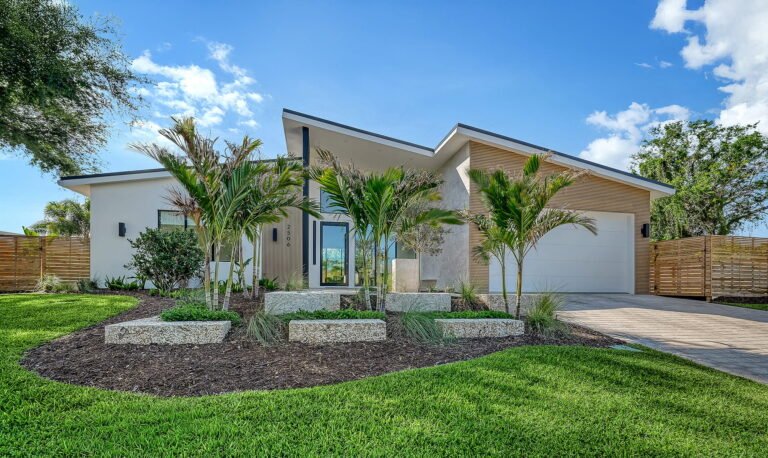
Whole Home Renovation in Sarasota: Where to Start
A whole home renovation in Sarasota starts before any design work. First, list how you live now. Next, check the condition of the house. Then look up your flood zone and the FEMA 50% rule. Only after that should you hire a designer and collect bids.
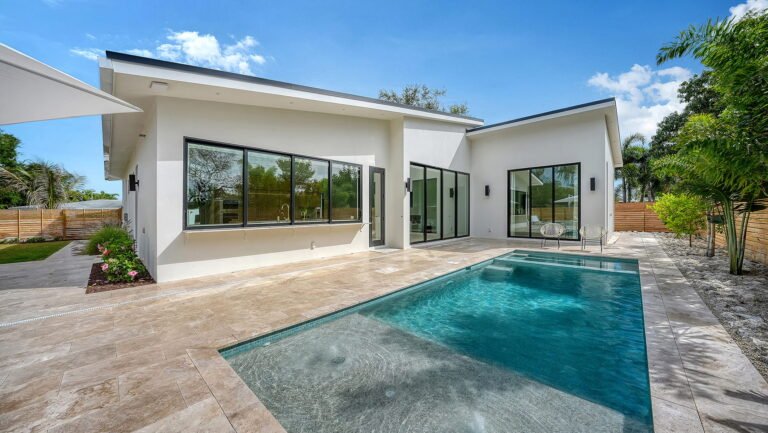
That order saves money. It also saves you from the most painful surprise in coastal Florida. I’ve designed Sarasota homes for 24+ years, from Siesta Key to Lakewood Ranch. Here is the sequence I walk every client through.
- Step 1
- Write down how you live now
- Step 2
- Check the house before you plan
- Step 3
- Look up your flood zone and the 50% rule
- Step 4
- Set a budget range and a reserve
- Step 5
- Hire a designer before you collect bids
- Step 6
- Choose one project or phases
- Step 7
- Plan around the Sarasota calendar
- Step 8
- Decide where you will live
Step 1: Write Down How You Live Now
Start with a notebook, not a mood board. Walk each room and write what works. Then write what frustrates you.
Be honest about daily life. Where do you drop keys and bags? Which rooms sit empty all year? Where does everyone end up at dinner?
This list becomes your design brief. It keeps the project tied to your life, not to a photo you liked online.
Step 2: Check the House Before You Plan
A whole home renovation touches the bones of the house. So learn what those bones need first.
Hire a licensed home inspector for a full report. Ask about these items in writing:
- Age and condition of the roof
- Windows and doors, and whether they are impact-rated
- Air conditioning and ductwork
- Plumbing lines and the water heater
- The electrical panel and wiring
- Any signs of past water or moisture damage
Fix the hidden systems before the pretty finishes. New cabinets won’t help if the AC fails next summer. In Sarasota’s humidity, moisture problems spread fast once walls are closed.
Step 3: Look Up Your Flood Zone and the 50% Rule
This is the step most Sarasota homeowners skip. It can change your whole plan.
The FEMA 50% rule is part of the National Flood Insurance Program. It applies to homes in flood hazard areas. The Sarasota County Property Appraiser explains the core rule. The limit is half the structure’s market value. Go past it, and the whole house must meet current flood code.
That can mean raising the house or using flood-resistant materials. It can also mean adding flood vents. Any of these can reshape the budget.
Two details matter here. The value counts the building only, not the land. And it comes from the tax roll or an appraisal made for this purpose.
Look up your zone on the FEMA Flood Map Service Center. Then read the Property Appraiser’s guide to the 50% rule.
Rules also differ by town. Sarasota County, the City of Sarasota, Venice, and Longboat Key each apply them their own way. Some count work across more than one permit. Call your local building office before you settle on a scope.
Step 4: Set a Budget Range and a Reserve
Pick a range you’re comfortable spending, not one exact number. Then hold part of it back as a reserve.
Older homes hide things behind walls. Rotted framing and outdated wiring are common finds. A reserve keeps a surprise from stopping the project.
Ask your contractor what reserve they suggest for a house of your age. For design fees, see my Sarasota interior design cost guide. I quote a fixed number after a free consultation.
Step 5: Hire a Designer Before You Collect Bids
Many people call contractors first. I understand why. But bids without a design are guesses.
One contractor prices mid-range tile. Another prices premium tile. You can’t compare those numbers.
A finished design fixes that. Every contractor prices the same drawings and the same selections. Your bids become a fair comparison.
On a whole-home project, my work covers space planning, 2D drawings, and 3D renderings. It also covers material and furnishing selections. I then coordinate with the licensed contractors who do the building. I stay involved through construction and check the work against the plan.
Not sure how to choose? Read how to choose an interior designer in Sarasota.
Step 6: Choose One Project or Phases
You can renovate the whole house at once. Or you can split the work into phases.
| Approach | Works well when | Watch out for |
|---|---|---|
| All at once | You can move out and want one mess | A larger single permit value under the 50% rule |
| In phases | You need to stay home or spread costs | Some towns count phases together |
Either way, follow the same build order. Structure, roof, and windows come first. Mechanical systems come next. Walls, floors, cabinets, and paint come last.
Plan the whole house on paper, even if you build in phases. That keeps floors and trim consistent from room to room.
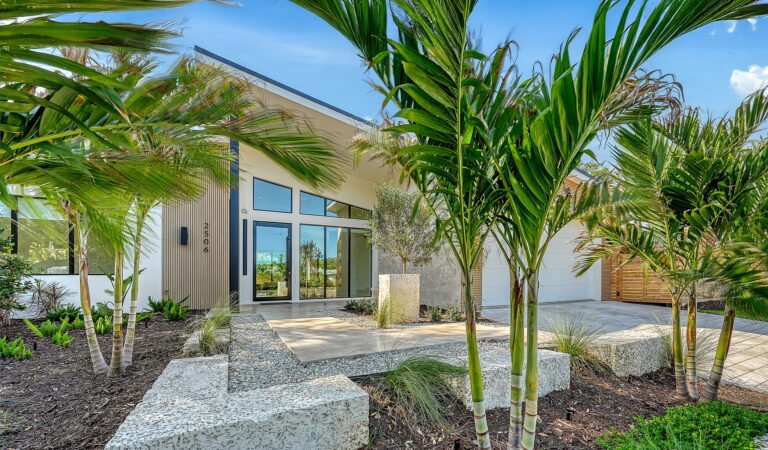
Step 7: Plan Around the Sarasota Calendar
Atlantic hurricane season runs from June 1 to November 30. That affects when walls and roofs are open.
Ask your contractor how they protect an open house from a storm. Get the answer before you sign.
Season matters for another reason too. Many Sarasota owners live here part of the year. If that’s you, plan design meetings while you’re in town. Then let construction run while you’re away.
Step 8: Decide Where You Will Live
Living through a whole-home renovation is hard. Dust, noise, and shut-off water test everyone.
If you stay, protect one bedroom and one bathroom as a safe zone. If you move out, line up a rental early. Good seasonal rentals book fast in Sarasota.
My Advice: Decide the Flow Before the Finishes
The biggest mistake I see is picking finishes before the floor plan is set. Clients fall for a tile, then build a room around it.
I work the other way. First, I settle how you move through the house. Then I look at how Gulf light enters each room. Finishes come last.
In Sarasota, that order matters. Strong afternoon light changes how every color and stone reads. A finish chosen too early often looks wrong in the finished room.
See a finished Sarasota project on the Goldenrod Street project page.
What Changes by Neighborhood
Where your home sits shapes where you start.
On Siesta Key, Casey Key, and Longboat Key, start with Step 3. Barrier island homes often sit in flood zones. Salt air also wears down metal fixtures and hardware faster.
In Downtown Sarasota and the Rosemary District, many projects are condos. Your association may limit work hours and approve changes. Ask for their rules first.
In Lakewood Ranch, many homes are newer. Your renovation may focus more on layout and finishes than systems.
For the full scope of services, see my home remodeling in Sarasota page. For a broader overview, read my Sarasota home renovation guide.
Frequently Asked Questions
Where do I start a whole home renovation in Sarasota?
Start by listing how you live now and checking the house’s condition. Then look up your flood zone and the FEMA 50% rule. Hire a designer after that, and collect contractor bids last.
Should I hire a designer or a contractor first?
Hire the designer first. A finished design lets every contractor price the same drawings and selections. That makes their bids a fair comparison.
What is the FEMA 50% rule?
It is a National Flood Insurance Program rule for homes in flood hazard areas. The limit is half the building’s market value. Go past it, and the whole house must meet current flood code. Land value is not counted.
Can I live in my house during a whole home renovation?
Yes, if the work runs in phases. Keep one bedroom and one bathroom closed off from dust. If the whole house opens at once, plan to move out.
Does a designer handle the construction?
No. Licensed contractors do the building. I design the home and coordinate with those contractors. I also check their work against the plan.
Let’s Talk About Your Renovation
Free consultation. No sales pitch. Just a real conversation about your vision for your Sarasota home.
- Siesta Key
- Casey Key
- Longboat Key
- Lakewood Ranch
- Downtown Sarasota
Audrey Arthur — Audrey Design SRQ
Interior Designer in Sarasota FL | 24+ Years Experience | Indoor + Outdoor Design SpecialistAudrey Arthur is the founder and principal designer of Audrey Design SRQ. She has run her Sarasota, Florida studio since 2002 — over 24 years. Audrey works personally on every project. No handoffs, no junior designers.
Her work covers residential interiors, kitchen and bathroom remodels, whole-home renovations, and new construction. She specializes in indoor-outdoor design built for Gulf Coast humidity, salt air, and light. Each project runs from space planning and 3D renderings to material selection and contractor coordination.
Her portfolio includes homes on Siesta Key, Lido Key, and Casey Key. It also includes a Rosemary District condominium and homes in The Oaks. The studio serves Sarasota, Siesta Key, Longboat Key, Lido Key, and Bird Key. Coverage also includes Casey Key, St. Armands Key, Nokomis, Venice, and Manasota Key. She also works in Lakewood Ranch, Osprey, and Bradenton.
📍 Sarasota, FL |
🌐 Read Full Bio |
🖼 See the Portfolio |
⭐ Client Reviews |
🏠 Houzz Profile |
📞 941-321-9474